Best Tourist Attraction Places

Top Tourist Attraction Places in Nepal

Nepal's climate in the course of the year is mainly determined by the monsoon, which results in very high levels of rainfall between June and September, while the remaining months are moderately dry.

1. Bhaktapur

Unlike Kathmandu and Patan which are located close together, the third of the "Royal Cities", Bhaktapur dishonesty some 14 km away, "outside the holy hollow of the Valley" on the old trade route to Tibet. For Bhaktapur the trade route was both arterial link and major source of wealth. Its relative remoteness allowed the city to develop independently and in ways which distinguish it from the other two. With farmers - some of the best in the Valley - numbered heavily among its inhabitants, the city is self-supporting.

2. Gorkha

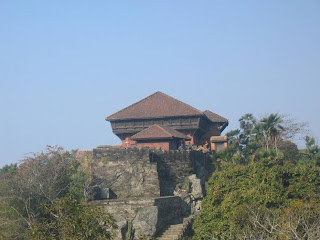
When the Shahs invaded it in the mid 16th c. from West Nepal, Gorkha was probably previously the seat of local rajas. The Shahs themselves are believed to have come originally from Rajasthan, having been driven out by Muslim conquerors. Although this has yet to be convincingly proved, there are undoubtedly striking similarities between the Rajasthan’s and the Gurkhas including their shared military prowess and religious fervor.
3. Janakpur

Janakpur is located in the south of the Tarai 22 km from the Indian border. The town is the heartland of the very old Maithili culture which gave birth to its own language and script. Janakpur is also a popular pilgrim center.

4. Kathmandu

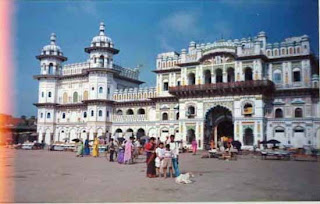
Today Kathmandu has more of a large-city environment than either Bhaktapur or Patan and possesses a more developed urban infrastructure. Among its wealth of historic buildings it can boast the biggest of the ancient royal palaces as well as innumerable Rana palaces and important shrines. Despite the growth which has made a modern city of Kathmandu, the old center still retains something of a medieval air.
5. Langtang National Park Trek

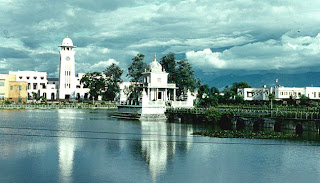
The different zones of the Langtang National Park range from oak and pine woods through sub-Alpine juniper, larches and birch to Alpine bushes, scree slopes and snow. Animals establish here include pandas, muntjaks, musk, Himalayan bears, serows and monkeys.
6. Lumbini

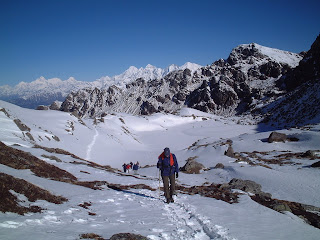
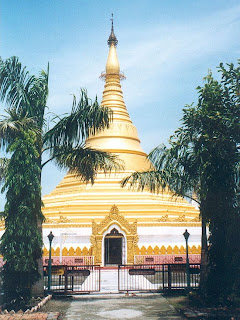
Lumbini is extraordinary only for its calm, undisturbed by major celebrations and largely devoid of sights. Only a few relics from the excavation site remain to bear witness to the importance of the town and these have come within the framework of the Lumbini Development Project. Lumbini has been nominated for inclusion on the UNESCO list of world cultural sites.

7. Mount Everest

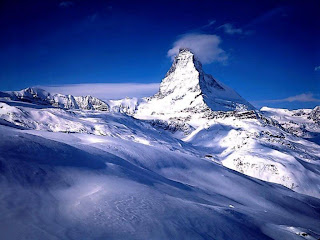
The highest summit on earth - Mount Everest, Sagarmatha or Chomolungma - is 8848m high. The route to the foot of Mount Everest became popular following the, now legendary, first ascent of the peak in 1953 by Edmund Hillary from New Zealandand the Sherpa Tensing Norgay. In 1978 Reinhold Messner and Peter Habeler were the first to reach the mountain summit without artificial oxygen.
8. Patan

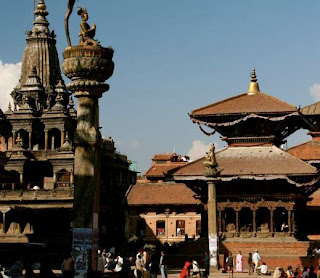
Patan's strict devotion to a grid pattern of streets is truly outstanding, any winding thoroughfares, survivals from older settlements, being few and far between. The districts are clearly laid out and spacious, the wide streets more meticulously paved than in the other royal cities. Of the two main axes defined by the stupas, that from north to south is the most important.

9. Pokhara

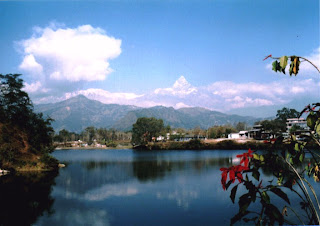
Pokhara consists of many unlike parts and lacks cohesion: airport, bazaar, Lakeside, Pardi, as well as the shopping centers of Mahendra Pul and Chipledhunga are far away from each other; also the long link road is not easy to reconnoiter on foot.
Top Tourist Attraction in Ukraine

1. Crimean Resorts

Crimea is a fascinating region to explore, as well as a great place to spend a vacation. Across the centuries it has attracted settlers such as the Greeks, the Venetians and the Genoese - all of whom founded cities along the coast and inter-married with the local people.

2. Carpathian Mountains

Carpathian Mountains are considered to be the Green Pearl of Ukraine. It is one of the most popular resorts and tourist centers of the country. A beautiful mix of natural areas, forests, meadows, shepherds and humans living in harmony with nature is what makes the mountains so attractive to tourists!

3. Kyiv

Kyiv is the Capital of Ukraine. Kyiv (also known as Kiev), a scenic city of close to 3 million people situated on the Dnieper River, is the bustling capital of Ukraine. Ancient Kievan Rus, which reached its greatest period of ascendancy during the 11th and 12th centuries, was a center of trade routes between the Baltic and the Mediterranean. The art and architecture of Kyiv are world treasures.

4. Lviv

Lviv is a very poetic city steeped in legends both ancient and relatively new. Narrow medieval streets paved with stones, architectural decoration done in different styles – all preserved in its original form. In ancient times Lviv was the capital of a mighty Slavic state called the Galicia-Volyn principality. Being a part of the Austro-Hungarian Empire and then Poland contributed to the formation of the city’s unique image.

5. Odesa

Odessa is referred to as the "Pearl of the Black Sea" is the 3rd largest city in Ukraine, the largest city along the Black Sea, and the most important city of Ukraine for trade. Odessa's mild climate, warm waters and sunlit beaches attract hundreds of thousands of people year around. Its shady lanes, beautiful lightly pastel buildings and cozy squares impart to the city a certain air of intimacy.

6. Yalta

Steep mountain peaks serve as a lovely backdrop for Yalta the jewel of the Crimean peninsula. There is no surprise that the writer Anton Chekhov would choose to live in this seaside resort—it seems to be a combination of Carmel California the French Riviera and Greece. Yalta (pop. 80 000) has exemplary resorts, museums, and beaches.

7. Kamyanets-Podilsky

Kamyanets-Podilsky, one of the oldest cities in Ukraine, is considered a phenomenon of great cultural importance. A rocky island skirted by the tight loop of the Smotrich River flowing in a picturesque canyon, served as a unique pedestal on which over more than a thousand years both well-known and anonymous masters created a miracle in stone.

8. Chernihiv

Chernihiv has known human settlement for over 2,000 years. The region comprises a very important historic region, notable as early as the Kyivan Rus' period, when the oblast' cities of Chernihiv and Novhorod-Sivers'kiy were frequently mentioned. The city of Chernihiv was the second most important Ukrainian city during the Rus' period of Ukrainian history, often serving as a major regional capital.

9. Sophievka Park

Uman dendro park Sophievka is the real world landscape architecture masterpiece of the end of the XVIII-th century and the beginning of the XIX-th. The park is spread over the territory of 154,7 hectares and is situated at the outskirts of the ancient town Cherkassy, Uman region. It is considered to be the standard of the landscape composition of water, land, architectural works and sculptures.

10. Poltava

Located between Kharkiv and Kyiv in Ukraine, Poltava is best known as the site of a 1709 battle between a coalition of Cossacks, led by Mazepa, and the Swedes (Charles XII) against the Russian army of Czar Peter I. The subsequent Russian victory in battle established Russia’s prominent position in Europe and consequently Ukraine’s decline.

Top Tourist Attraction in Turkey

1. St. Sophia Museum

Haghia Sophia Museum, the great masterpiece of Byzantine art. It was built by Justinian in 6th century AD and is the 3rd church to occupy this site. At the time it was built, it was the largest church in existence. The church was sacked by the Latin’s during the 4th crusade in 1204 and many of its treasures taken to the west. Since 1936, by Ataturk's order it has been a museum. The interior is decorated with wonderful Byzantine mosaics from 6th to 13th century AD.

2. Blue Mosque - Sultan Ahmet Camii

Blue Mosque, Sultan Ahmet Camii is one of the most beautiful mosques in the world. Its name is derived from the blue tiles decorating its interior. Completed in 1616 by Mehmet Aga, Imperial Architect and one of the students of the great architect Sinan. Its grace and beautiful proportions were intended to reflect the splendour of Islam. It was the supreme Imperial Mosque of the Ottoman Empire. The famous blue and green.

3. Pamukkale

Pamukkale is one of the natural wonders of the world. It is a unique geological formation formed over 14.000 years. The spring water at Pamukkale has therapeutic qualities and since antiquity has been said to cure rheumatism, kidney and heart diseases. Hierapolis means sacred-city and its history goes back 6th C BC. At its peak the population reached about 100,000. The ruins at Hierapolis cover an extensive area.

4. Ephesus

Ephesus is one of the best-preserved ancient cities in the world with a history dating back the 12 C BC. It was an important trade and religious center. During the Roman period its population reached approx. 250,000.One of the Seven Wonders of the World, Temple of Artemis was in Ephesus. It is also the site of one of the Seven Churches of Revelation.St. Paul lived and preached for about 2 years in Ephesus.

5. Cappadocia Region

One of the geological wonders of the world. Cappadocia is a high plateau in Central Turkey at an altitude of 3270 ft / 1000 m. It lies in a triangle formed by the three main towns of Kayseri, Nevsehir and Nigde. The history of Cappadocia begins 60 million years ago with the eruption of 2 volcanos, covering the area with lava and tufa. In later periods rain and wind eroded the land and created unusual valleys, canyons and cones. For many centuries Hittites, Assyrian Colonies, Greeks and Romans lived in the region. Cappadocia is also a very important region in early Christian History.

6. Pergamum

The history of the city starts in the 8th C BC when Aeolian Greek colonies settled in the area. The city was founded on a hill overlooking the Caicos plain. During the reign of Eumenes II in the 2nd C BC, it became one of the cultural and intellectual centers of the day. With the invention of pergamena (parchment) its library grew to rival in size, the great library of Alexandria. The famous Altar of Zeus was here. Pergamum was one of the Seven Churches of the Revelations.

7. Sardis

Sardis was the capital of the Kingdom of Lydia. It was founded on the banks of the famous golden-bearing river Pactolus. The legendary King of Lydia Croesus (560-540 BC) controlled most of western Asia Minor and made generous offerings to the temples of Delphi, Artemis and Didyma. In the 7th C BC the Lydians invented the first coinage in history. They developed methods to extract gold from metal ores. Some of the highlights are the temple of Artemis, one of largest temples in Asia Minor and the Roman Gymnasium complex.

8. Aspendus

Aspendus is located in the ancient region of Pamphylia. According to some experts the earliest settlers of the city were the Hittites. The name Aspendus is of Anatolian origin. The Greek colonies arrived here around 13th C BC and took over an existing settlement. Alexander the Great claimed the city from the Persians and during the Roman period it was an important port city.

9. Commagene Kingdom at Mt.Nemrut

One of the most spectacular sites in Turkey especially at sunset. Mt Nemrut (approx. 2552m) is an extension of the Taurus mountain range in southeastern Turkey. After the division of Alexander's Empire into three, the Seleucids established the relatively small and wealthy Commagene Kingdom in the region. In 62 BC, Antiochos I became king of Commagene and developed his kingdom as a strategic crossroad on the important trade routes between Syria, Mesopotamia and Rome.

10. Gallipoli - Canakkale

The slim peninsula on the northern side of the Dardanelles has been designated a National Park. In 1915, Allied warships tried to force their way through the straits with the intention of opening a supply line to Russia via the Black Sea. Allied landings on the Gallipoli Peninsula were finally beaten off by the Turks following bitter warfare. Casualties were high on both sides and today several war memorials stand in the attractive landscape of pine forests, green hills and pretty beaches.

Top Tourist Attraction Places in Greece

1. Athens

Athens or Athena is the capital of the Hellenic Republic of Greece as well as the chief town of the administrative area of Attica. It is one of the oldest cities in the world with recorded history that dates back over 3,000 years. The city, which has contributed so much to Western culture ever since olden times, is now the Religious and financial center of Greece. Athens was the birthplace of many of the most powerful philosophers such as Socrates, Pericles and Sophocles.

2. Corfu

Corfu is the most significant and most northerly of the Ionian Islands, lies off the coasts of Albania and the Greek area of Epirus, at a distance ranging between two and 20km. The beauty of its scenery, with gentle green hills in the south and rough limestone hills in the north, rising to 906m/2,973ft in the bare double peak of Mt Pantokrátor, its mild climate and its abundant southern flora make Corfu a very popular holiday area. The island's main foundation of revenue, in addition to the increasing tourist trade, is agriculture.

3. Corinth

Corinth owed its great importance in olden times its location, with the hill of Acrocorinth providing a strong acropolis. It was said that Acrocorinth and Ithome were the two horns of the Greek bull, and that whoever held them possessed the Peloponnese. Corinth prohibited the 6km/4mi wide Isthmus, the only land route into the Peloponnese, and with its two harbors, Lechaion in the Gulf of Corinth and Kenchreai in the Saronic Gulf, also controlled the movement of goods between the two gulfs. The area of Corinth was already occupied in Neolithic times.

4. Crete

Approaching Khaniá, Cape Spátha is seen on the right, the peninsula of Akrotíri on the left. Between the two is the large sweep of Khaniá Bay. Ahead can be seen the White Mountains. The boats anchor in the open bay, the big ferries beyond the Akrotíri peninsula in Soúda Bay, the only good harbor on the island, which offers a protected anchorage for a whole fleet of ships in any weather.

5. Delphi

Delphi, lying on the slopes of Mt Parnassus high above the Gulf of Corinth, is one of the most famous religious group sites in Greece, well-known throughout the olden Greek world and beyond as the refuge of Apollo and the shrine of his oracle. The site ranks with the Acropolis in Athens, Olympia and the island of Delos as one of the most main sites of the classical period of Greece; and the Wealth of ancient remains combines with its magnificent mountain setting to make Delphi one of the high points of a visit to Greece.

6. Metéora

Vertical rock faces, stridently pointed pinnacles and massive crags tower up above Kalambáka and the village of Kastráki, separated by deeply slashed defiles. Perched on these rocks are the monasteries of Metéora, which take their name from their position - ta metéora monastíria, the monasteries hanging in the air. Originally easy to get only by bridle tracks, ladders and windlasses, the monasteries have now been brought within the reach of visitors by the construction of modern roads and flights of steps and by signposting;

7. Mykonos

The bare rocky island of Mykonos, the most easterly of the northern Cyclades, was once one of the most significant trading centers in the western Aegean. Its arid and only moderately fertile soil permits only a self-effacing development of agriculture, but its good-looking beaches have made it one of the most popular holiday islands in the Aegean. Mykonos is also a good base from which to visit the neighboring islands of Délos and Rínia.

8. Naxos

Naxos, the biggest and most attractive of the Cyclades, is traversed from north to south by a range of hills which fall away sharply on the east but slope down gradually on the west into fertile rolling country and well-watered plains. The hills rise to a height of 1,003m/3291ft in Mt Zas and are cut by two passes. The economy of the island has depended since olden times on agriculture, marble-quarrying, emery-mining and the revival of salt from the sea, which have brought it a considerable degree of prosperity.

9. Paros

The island's substantial prosperity has depended since olden times on agriculture, preferential by fertile soil and abundance of water, and on the working of marble, which is still quarried on a small scale. In recent years the rapid development of the tourist trade has brought changes in the island's landscape, economy and social structure. Excavations on the islet of Saliangos, which was once joined to Paros, have yielded evidence of settlement in the late Neolithic period.


10. Rhodes

The island of Rhodes was already full in the Neolithic period, but its great cultural flowering came only with its settlement by Dorian Greeks. Their three cities of Lindos, Ialysos and Kameiros were members of the Hexapolis, the league of six Dorian cities, which became subject to the Persians in the sixth century B.C. In the fifth century B.C. Rhodes became a member of the first Attic maritime association, the Confederacy of Delos. About 408 B.C.

Well-Known Tourist Places in Spain

1. Barcelona

Barcelona dishonesty on the Coast Dorada, between the mouths of the Riu Besós and the Riu Llobregat. The olden and the modern capital of Catalonia, a university town and the see of a bishop, it is Spain's biggest city after Madrid, its principal Industrial and commercial town the third biggest seaport in the Mediterranean, with a main international airport.

2. Cordoba

Cordoba, chief town of its province and the most significant city in Andalusia after Seville, lies at the foot of the Sierra de Cordoba, an outlier of the Sierra Morena, in a plain which slopes gently down to the Río Guadalquivir. Narrow winding streets, small squares and low whitewashed houses, most of them with beautiful Patios which can be admired from the street, give the town a Moorish atmosphere inherited from its past.

3. Granada

Granada is a noted visiting the attractions and cultural hot spot in Spain. The Alhambra, a Moorish fortress and palace, is a UNESCO World Heritage site that serves as museum of Islamic architecture today. There are numerous other notable architectural sites such as Granada's Cathedral, the original Jesuit College, Bermejas Towers, and The Cube.

4. Madrid

Madrid's rise from a local administrative center to an international city has catastrophic effects on the housing market. A tremendous property boom drove housing prices sky-high, and in the suburban districts round the city, prices even doubled. Property prices have leveled off creating a more favorable housing market. Madrid still remains one of the most exclusive areas in Spain along with Barcelona and Vizcaya.

5. Majorca

Majorca, the biggest and most visited of the Balearics, is made up of three noticeably different parts. Running parallel to the northwest coast is the Sierra del Norte, a range of wooded hills which includes the top point on the islands, the Puig Mayor. The hills fall steeply down to the sea in much-indented cliffs which form picturesque little coves and creeks. In the southeast of the island is the much lower Sierra de Levante, in which are a number of stalactitic caves.


6. Malaga

Malaga, attractively located on the south coast of Spain at the foot of the Montes de Malaga amid luxuriant subtropical vegetation, is one of the oldest Mediterranean ports. The wide sweep of Malaga Bay is bounded on the east by the Punta de los Cántales and on the west by the Torre de Pimentel. Half way round the bay is the hill of Gibralfaro, crowned by its castle. To the west of the town extends the fertile Vega or Hoya de Malaga, in which oranges, figs, bananas, sugar-cane, cotton and other crops flourish.

7. Salamanca

The ancient and famous university town of Salamanca, chief town of its region and the see of a bishop, lies in southwestern León on the right bank of the Río Tormes. The climate of the approximately treeless plateau shows sharp contrasts: the winter is severe and often bitterly cold, the summer sometimes Almost unbearably hot.


8. Saragossa

Saragossa, once the residence of the kings of Aragon and now chief town of its province and the seat of a well-known university, lies in the Ebro basin, on the right bank of the river, and from time immemorial has been the principal crossing point for traffic from the Pyrenees into Castile. The Huerta de Saragossa, well watered by the Canal Imperial and the rivers Ebro, Huerva and Gallego, is a region of great fertility, and Saragossa is accordingly a main agricultural center, as well as possessing considerable industry.

9. Sevilla

Sevilla, Spain's fourth-largest city, chief town of its area and capital of Andalusia, the see of an archbishop and a university town, lies in a fertile plain on the left bank of the Río Guadalquivir. Here the Guadalquivir emerges into the Andalusian lowlands, and at high tide - The consequence of which is felt for more than 100km/60mi up the river - it is possible for seagoing vessels of some size to reach the river port of Seville, 87km/54mi from the sea, using a channel which bypasses the last bend on the river before the town.

10. Tenerife

Tenerife, the uppermost of all the Atlantic islands, with the Pico de Teide, is regarded by many as the most attractive of the Canary Islands. None of the other islands has scenery of such overwhelming grandeur - the bizarre stony desert of the Caldera de las Cañadas, the great expanses of pine forest, and the fertile valleys in which bougainvilleas, poinsettias and hibiscus flourish.


12. Toledo

With its unique location, its picturesque townscape and its wonderful old buildings, Toledo, chief town of its area and the see of an archbishop, the Primate of Spain, is one of the grand tourist cities of Spain, an essential goal for every visitor interested in art and history. Toledo has long Famed for its sword blades and its gold and silver inlay work, a craft tradition brought in by the Moors.

13. Valencia

Valencia, the old capital of the kingdom of Valencia and now chief town of its area, Spain's third biggest city, the see of an archbishop and a university town, lies close to the Mediterranean on the right bank of the Río Turia, in the Fertile Huerta de Valencia. Described in an olden saying as "a piece of heaven fallen to earth", Valencia is a typically southern town with its bustling streets and the brightly colored azulejo domes of its many churches.